0%

Choosing a Mechanical Die Cutting Press is rarely a simple price comparison. The right machine must match your materials, production volume, tooling, and available floor space. A press that cuts thin paper beautifully may struggle with dense board, leather, rubber, or layered adhesive materials. That difference becomes obvious when edges fray, sheets shift, or the machine overheats during a long run.

Manufacturing quality expert Joseph M. Juran offered a useful principle: “Quality is fitness for use.” His words apply directly here. A reliable press should fit your actual work, not an imagined factory. Check cutting force, bed size, stroke length, speed control, registration accuracy, and tool compatibility. Watch the machine operate, if possible. Listen for uneven sounds. Inspect the cut edge under bright light. Small details often reveal expensive weaknesses.

This guide presents seven practical tips for selecting a Mechanical Die Cutting Press. It considers both technical performance and daily usability. Energy use, operator access, maintenance intervals, spare parts, and supplier support also deserve attention. A low purchase price can become costly after repeated downtime. Still, no checklist is perfect. Your material samples may behave differently from catalog specifications. Test them before committing. Ask difficult questions. Record the answers. A dependable press should deliver clean cuts today and remain serviceable years later, even when production conditions become less predictable.
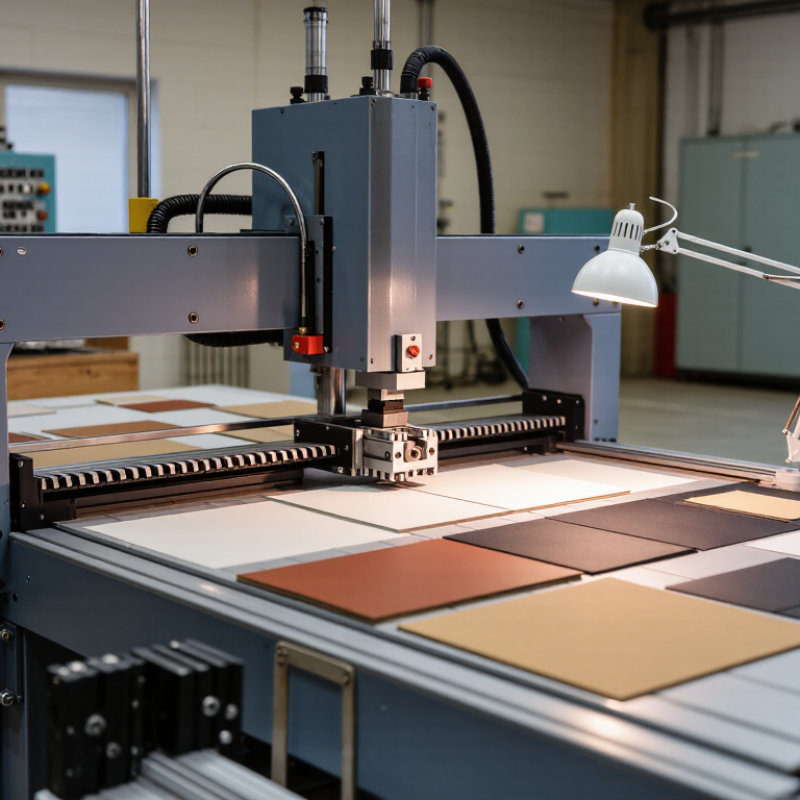
7 Tips to Choose a Mechanical Die Cutting Press

Define the Materials and Cutting Requirements

Define the Materials and Cutting Requirements

Selecting a mechanical die cutting press starts with the material, not the machine size. Paperboard, corrugated stock, foam, rubber, and thin plastic behave differently under compression. Record thickness, tensile strength, density, coating, grain direction, and surface finish. A small variation can change crease quality and waste levels.

Tip 1: Test the exact substrate. Do not rely only on supplier specifications. Measure actual caliper at several points, then run short trials with production-speed pressure. Smithers’ The Future of Global Packaging to 2028 values the global packaging market at about 1.17 trillion US dollars in 2023. Its growth outlook also highlights lightweight structures and material efficiency. These trends make precise pressure control increasingly important.

Tip 2: Define the finished geometry. List cut depth, crease depth, perforation spacing, registration tolerance, and sheet size. For adhesive films or flexible foam, include release liner behavior. Mechanical presses can deliver strong repeatability, but excessive force may crush edges or distort delicate layers. That mistake is common.

Tip 3: Calculate the cutting load before purchase. Estimate the total cut length and multiply it by the material’s resistance. Add a practical safety margin, often 20 to 30 percent, for dense areas and tool wear. The Freedonia Group reports continued demand for converted packaging and specialty materials, where mixed substrates are increasingly common. A press sized for today’s easiest stock may struggle with tomorrow’s laminate. Recheck the numbers.

Compare Press Types, Tonnage, and Working Capacity

7 Tips to Choose a Mechanical Die Cutting Press

Tip 1: Match the press type to the material.

Platen presses suit cartons, labels, and thicker sheets. Rotary presses support continuous web production. Flatbed systems offer flexible tooling and short-run control.

Tip 2: Calculate cutting force from material thickness, perimeter, and die design.

Add a safety margin, but do not oversize blindly. A larger press is not automatically better.

Tip 3: Check rated tonnage at the actual operating stroke.

Some specifications show peak force only. In practice, that figure can mislead purchasing teams.

Tip 4: Compare working capacity carefully.

Measure bed length, bed width, daylight, maximum sheet size, and feeding clearance. A die may fit the bed yet fail during stripping.

Tip 5: Review speed under load, not only the advertised maximum.

Smithers valued the global packaging market at about $1.2 trillion in 2023, in The Future of Global Packaging to 2028. That scale increases pressure for stable output, not impressive empty-cycle speed.

Tip 6: Examine waste removal and registration control.

Small alignment errors become expensive across long production runs. I have seen operators choose capacity over repeatability, then lose time correcting scrap.

Tip 7: Verify energy use, maintenance access, and tooling change time.

A 2024 report from the International Energy Agency notes that industrial motors account for roughly 30% of global electricity use. Press efficiency deserves attention.

The difficult part is forecasting future jobs. Leave practical capacity for new materials, but avoid buying unused tonnage. That judgment may still be imperfect.

Evaluate Die Compatibility and Machine Adjustability

7 Tips to Choose a Mechanical Die Cutting Press

Evaluate Die Compatibility and Machine Adjustability

Die compatibility starts with the material, not the press brochure. Confirm the die’s length, width, cutting rule height, chase format, and maximum pressure. A narrow margin can create uneven impressions, especially on dense board. Check the press’s minimum and maximum sheet sizes. Include the gripper margin.

Smithers’ 2024 packaging market outlook estimates global packaging demand will exceed US$1.2 trillion by 2028. This growth increases pressure to handle mixed substrates and shorter production runs. A compatible press should process paper, folding carton board, labels, and laminated sheets without excessive changeover time. Ask for test runs using your actual stock. Sample results are more reliable than catalog claims.

Adjustability affects both quality and waste. Look for independent controls for pressure, stroke length, speed, dwell time, and feeder alignment. A practical press should allow fine pressure changes, preferably in small increments. This protects delicate coatings and reduces crushed edges. Registration adjustment matters too. Even a strong die performs poorly when the sheet drifts.

In my experience, operators often overlook shut height and die-cushion clearance. That mistake becomes expensive later. Measure the complete tooling stack, including cutting plate and packing sheets. PMMI’s 2024 State of the Industry report continues to identify workforce availability as a major equipment concern. Clear adjustment scales and repeatable settings therefore have real value. Automation helps, but it cannot repair an unsuitable die. One detail still deserves reflection: maximum tonnage alone does not prove compatibility.

7 Tips to Choose a Mechanical Die Cutting Press

Recommended evaluation weighting for die compatibility, machine adjustability, production performance, and operating cost.

Die compatibility and adjustability should receive the highest priority because the press must accommodate the die size, cutting force, material thickness, and setup requirements. Confirm every specification against the die manufacturer’s technical data before purchasing.

Check Safety Systems, Controls, and Maintenance Needs

Choosing a mechanical die cutting press requires more than checking tonnage and speed. Safety systems deserve equal attention. The U.S. Bureau of Labor Statistics reported 3.4 recordable injury cases per 100 full-time manufacturing workers in 2022. A guarded point of operation can reduce exposure to crushing and amputation hazards.

Tip 1: Check interlocked doors, light curtains, emergency stops, and two-hand controls. Test each device during acceptance, not only during installation.

Tip 2: Confirm that safety circuits stop motion quickly and require a deliberate reset. Never accept an automatic restart.

Controls should be clear for operators wearing gloves or working under variable lighting. Review fault messages, access levels, recipe protection, and manual inching functions.

Tip 3: Select a control panel with readable status information and traceable alarm history.

Tip 4: Ask whether the press records safety trips and production faults. These records support training and root-cause reviews.

The U.S. Department of Energy’s Operations and Maintenance Best Practices Guide links planned maintenance with more reliable equipment performance. Still, a report cannot replace disciplined shop-floor checks.

Maintenance access matters every week.

Tip 5: Inspect lubrication points, belts, bearings, clutch systems, and guarding clearance.

Tip 6: Request a maintenance schedule based on operating cycles, not guesses.

Tip 7: Verify lockout procedures, spare-part availability, and technician training.

No checklist is perfect. Operators may notice unusual vibration before sensors do. Leave room for that human observation, and document it.

Assess Costs, Supplier Support, and Long-Term Value

7 Tips to Choose a Mechanical Die Cutting Press

Assess Costs, Supplier Support, and Long-Term Value

Choosing a mechanical die cutting press starts with more than its purchase price. A low quote can hide tooling, installation, training, and delivery costs. Ask for a five-year cost estimate, including electricity, lubrication, spare parts, and planned downtime. Request written details. In my experience, unclear maintenance terms create the most expensive surprises. A spreadsheet helps, although it never predicts everything.

Tip: Compare useful output, not only machine speed. Ask how many accurate sheets the press produces hourly with your material, die size, and waste rate. Inspect sample cuts, edge quality, registration, and setup time. A press that saves twelve minutes per job may outperform a faster machine needing constant adjustment. Check safety features and replacement-part availability. Small details matter.

Tip: Test supplier support before signing. Ask who answers urgent technical questions, how quickly parts ship, and whether remote diagnostics are available. Request references from users with similar production volumes. Read warranty exclusions carefully. Long-term value also depends on training quality, upgrade options, and serviceable design. If the supplier avoids failure-rate questions, pause. That is not proof of poor quality, but it deserves investigation. I would also budget for one uncomfortable year: inexperienced operators, changing orders, and a few mistakes. Durable value appears after the showroom shine fades.

7 Tips to Choose a Mechanical Die Cutting Press - Assess Costs, Supplier Support, and Long-Term Value
Tip What to Assess Practical Data Dimension Typical Reference Range Why It Matters Recommended Decision Check
1 Define the Application Confirm the material, sheet format, die type, cutting area, and required production volume before comparing machines. Nominal cutting force, maximum sheet size, maximum cutting area, and material thickness. Cutting force: 80–300 tons
Sheet size: 600 × 450 mm to 1,500 × 1,100 mm
Common paperboard range: 0.3–1.5 mm
A press that is too small may overload frequently, while an oversized press can increase purchase and operating costs without improving output. Choose a machine with approximately 15–25% capacity above the heaviest routine job, subject to the manufacturer’s specifications.
2 Compare Total Cost Evaluate more than the quoted purchase price. Include installation, tooling, training, utilities, maintenance, and downtime. Initial capital cost, annual operating cost, tooling cost, and expected service cost. Installation and commissioning: commonly 5–15% of equipment price
Preventive maintenance allowance: approximately 2–5% of equipment value per year
Tooling and setup costs vary by die complexity and production volume.
Low-priced equipment may have higher lifecycle costs if it requires frequent adjustments, has limited parts availability, or causes longer changeovers. Prepare a 5-year total-cost-of-ownership comparison using the same production assumptions for every quotation.
3 Check Productivity Review rated speed together with real-world feeding, stripping, setup, and changeover performance. Rated strokes per hour, effective utilization, setup time, and changeover frequency. Rated speed: approximately 3,000–8,000 strokes per hour
Realistic utilization in mixed production: often 50–75%
Changeover time: commonly 20–90 minutes, depending on job complexity.
Rated speed alone does not determine output. Feeding interruptions, die adjustment, waste removal, and operator experience can reduce productive hours. Request a sample run using representative material and calculate good sheets per hour, not only strokes per hour.
4 Evaluate Build Quality Inspect the frame, platen parallelism, drive system, clutch and brake, lubrication system, guarding, and control components. Pressure consistency, repeatability, structural rigidity, safety functions, and serviceable component access. Pressure repeatability target: approximately ±2–5% across comparable production cycles
Safety systems should include guarding, interlocks, emergency stops, and two-hand or equivalent controls where applicable.
Stable pressure and parallel platens help reduce uneven cutting, premature die wear, material waste, and quality variation. Ask for a documented factory acceptance test and verify that safety functions meet applicable local regulations.
5 Measure Supplier Support Assess commissioning, operator training, troubleshooting, spare-parts availability, remote assistance, and field-service coverage. Response time, parts lead time, training hours, warranty coverage, and technical documentation. Warranty period: commonly 12 months
Initial operator training: often 1–3 days
Critical spare-parts target: availability within 1–4 weeks, depending on the component.
Fast technical support can reduce the financial impact of an unexpected stoppage, especially where the press is a production bottleneck. Obtain written service-level commitments, a recommended spare-parts list, escalation contacts, and a clear warranty-exclusion policy.
6 Review Energy and Maintenance Compare motor power, lubrication requirements, wear components, inspection intervals, and ease of routine access. Installed electrical power, operating hours, lubrication frequency, consumable parts, and planned downtime. Installed motor power: commonly 7.5–30 kW, depending on press size and automation
Preventive maintenance intervals: often daily, weekly, monthly, and annual checks
Electrical consumption depends on motor load, operating speed, and idle time.
Simple access to wear parts and clear maintenance instructions can lower labor costs and extend equipment availability. Estimate annual energy cost using: average kW × operating hours × local electricity rate.
7 Calculate Long-Term Value Consider reliability, resale potential, expandability, quality consistency, and the machine’s contribution to cost per finished unit. Availability, scrap rate, useful service life, payback period, and output per labor hour. Availability target for a well-maintained production press: approximately 85–95%
Acceptable payback commonly depends on utilization, but many capital projects target 2–5 years.
Useful service life can exceed 10 years with proper maintenance and parts support.
A machine with a higher purchase price can deliver better value when it produces more saleable output, reduces waste, and remains supported for longer. Rank each option using a weighted score: 30% productivity, 25% total cost, 20% reliability, 15% support, and 10% safety or expansion.

Note: The ranges are general industry reference values for preliminary comparison. Actual performance, cost, safety requirements, and service life depend on machine configuration, material, workload, local labor rates, and operating conditions.

FAQS

How can I check whether a die fits a mechanical press?

Confirm the die’s length, width, rule height, chase format, and pressure requirement. Check minimum and maximum sheet sizes. Include the gripper margin. Measure the complete tooling stack, including plates and packing sheets.

Why should I test the press with my actual materials?

Catalog claims cannot show every production problem. Request test runs with your paper, board, labels, or laminated sheets. Inspect cut quality, registration, crushed edges, and changeover time. Samples matter more.

Which press adjustments affect cutting quality?

Useful controls include pressure, stroke length, speed, dwell time, and feeder alignment. Fine pressure adjustments protect coatings and delicate materials. Registration controls help prevent drifting sheets and uneven cuts.

Is maximum tonnage enough to prove compatibility?

No. Maximum tonnage alone proves very little. Shut height, die clearance, material density, and tooling thickness also matter. A powerful press can still damage a poorly matched die.

What should I examine during a machine demonstration?

Measure accurate sheets per hour using your material and die size. Check waste rate, edge quality, registration, setup time, and operator adjustments. A slower press may perform better when it needs fewer corrections.

What costs should I include beyond the purchase price?

Include tooling, delivery, installation, training, electricity, lubrication, spare parts, and planned downtime. Prepare a five-year cost estimate. It will still miss something.

How can I evaluate supplier support before buying?

Ask who handles urgent technical questions and how quickly parts can ship. Check remote diagnostic options, warranty exclusions, training quality, and upgrade paths. Request references from users with similar production volumes.

Which features help when operators have different experience levels?

Clear adjustment scales and repeatable settings reduce avoidable setup mistakes. Automation helps, but it cannot fix an unsuitable die. Budget for inexperienced operators, changing orders, and a few bad setups. Showroom confidence can fade.

Conclusion

Choosing the right Mechanical Die Cutting Press begins with a clear understanding of your materials, product dimensions, thickness, and required cutting accuracy. Consider whether the press can handle your production volume and compare different press types, tonnage ratings, working areas, stroke lengths, and operating speeds. The machine should also be compatible with your existing dies and offer practical adjustment features for alignment, pressure, and changeover efficiency.

Safety, control systems, and maintenance requirements are equally important for reliable daily operation. Look for clear controls, protective features, accessible components, and straightforward servicing procedures. Finally, evaluate the complete investment rather than focusing only on the purchase price. Consider energy use, tooling compatibility, spare parts availability, technical support, training, warranty coverage, and expected service life. A carefully selected press can improve productivity, reduce material waste, simplify maintenance, and provide stronger long-term value for your cutting operation.


Evelyn

Evelyn

Evelyn is a highly experienced marketing professional dedicated to helping businesses understand the value, quality, and practical applications of our products. With a strong background in market research, content strategy, customer communication, and digital marketing, Evelyn combines industry......