Choosing a Laser Die Cutting Machine requires more than comparing wattage, speed, or promotional prices. The right system must match your materials, tolerances, order volume, and production environment. A machine cutting adhesive labels may differ greatly from one processing folding cartons, laminates, or thin films.
Begin with the job itself. Record material thickness, maximum sheet size, cutting detail, daily output, and acceptable edge quality. Ask suppliers to process your real samples, not only standard test pieces. Inspect tiny corners, narrow channels, waste removal, and heat marks under normal lighting. Small flaws become expensive at scale.
Look closely at the laser source, motion system, software, ventilation, and maintenance access. A fast machine is not automatically a productive machine. If operators struggle with setup, downtime can erase its advertised advantage. Service response also matters. Request training details, spare-part availability, warranty terms, and references from comparable manufacturers. Independent reviews and documented safety certifications can support your evaluation, but they should not replace technical verification.
Budget beyond the purchase invoice. Include extraction equipment, consumables, software updates, electricity, operator training, and planned maintenance. The cheapest option may age badly. Yet the most expensive model may exceed your needs. That is the uncomfortable part.
A practical decision matrix can clarify priorities. Score each Laser Die Cutting Machine against quality, speed, flexibility, reliability, safety, and total ownership cost. Recheck your assumptions after testing. Production reality often disagrees with the brochure.
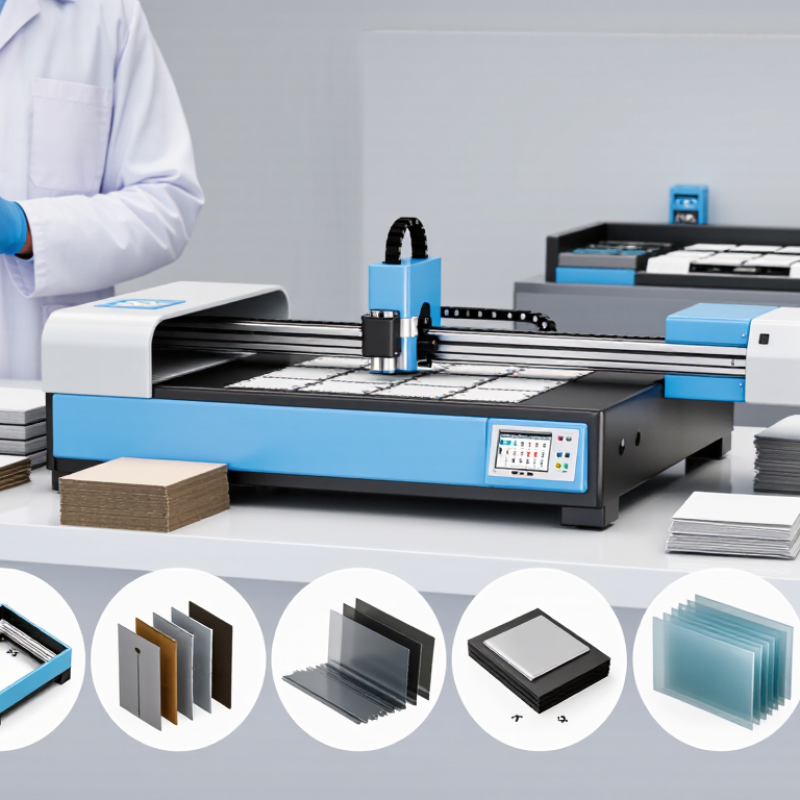
Choosing a laser die cutting machine starts with defining the job, not comparing machine prices.
Record the material, thickness, sheet size, cutting speed, and daily volume. Include coated films, laminated paper, corrugated board, or synthetic labels. Each material reacts differently to heat. In production trials, a clean edge may matter more than maximum speed.
Check whether the machine supports your smallest detail, repeat accuracy, and required waste removal.
Grand View Research estimates the global laser cutting machine market will grow at about 7.7% annually from 2024 to 2030. That growth suggests stronger demand, but it does not prove every machine suits your process.
Tips:
Build a simple requirement sheet. Measure your current job sizes for two weeks. Note setup time, rejected pieces, fumes, and maintenance delays.
Smithers’ report, The Future of Digital Print for Packaging to 2028, forecasts continued growth in short-run and customized packaging. Therefore, variable data handling and fast changeovers may deserve priority.
Ask suppliers for sample tests using your actual substrate. Request measured results, not showroom claims. Check extraction performance, software compatibility, operator training, and service response times.
A faster laser can still lose money if preparation takes too long.
I have seen teams overestimate future volume and buy unnecessary capacity. That mistake is common, and sometimes difficult to reverse.
Carbon dioxide lasers suit paper, films, wood, acrylic, and other nonmetallic sheets. Fiber lasers suit stainless steel, aluminum, and thin mild steel. Ultraviolet lasers handle delicate, heat-sensitive films with less thermal damage. Material testing matters more than assumptions.
No. High power may cut thick stock, but it can scorch thin film. Cutting quality also depends on focus, pulse control, speed, and assistance gas. More power is not always better.
Test small holes, sharp corners, narrow bridges, and repeated cuts. Check kerf width, edge taper, registration accuracy, and repeatability. Inspect edges under magnification. Touch them, too.
Nitrogen can reduce oxidation on metal edges. Air may reduce operating costs, but it can create darker edges. The best choice depends on material, appearance, and production needs.
Measure the largest sheet and add space for loading, waste, and registration marks. A small bed may increase handling and alignment errors. An oversized bed can waste floor space and energy. Measure twice.
Treat advertised speed as a reference, not a production promise. Request measured trials using your actual material and designs. Check acceleration, changeover time, defects, and repeated output. Fast movement can still create incomplete cuts.
Feeding, vision registration, unloading, and automatic job changes can reduce labor. Confirm sensor accuracy, software compatibility, cleaning access, and operator training. Automation can also add complexity. It is not automatically efficient.
Record power, speed, pulse frequency, focus position, and extraction settings. Repeat the same job after several operating hours. Heat buildup may change the result. A promising sample can still fail later.
Check fume extraction, lens access, calibration routines, and service procedures. Ask whether operators receive practical training. Independent safety certification adds confidence. Small maintenance gaps become expensive problems.
Use real shift data, measured waste, cycle times, labor, and changeover duration. Include energy use and maintenance needs. My early estimate was too optimistic. Leave room for adjustment.
Choosing the right Laser Die Cutting Machine begins with clearly defining your production requirements, including material types, sheet or roll dimensions, cutting patterns, expected output, and desired precision. You should compare available laser types according to their cutting capabilities and confirm that the machine can handle your materials without damaging edges or surfaces. Precision, repeatability, and compatibility with both current and future applications are essential factors for long-term value.
Machine size, cutting speed, workflow automation, and software integration should also match your workspace and production goals. Features such as automatic feeding, material positioning, and waste management can improve efficiency and reduce manual labor. Finally, evaluate safety systems, routine maintenance needs, technical support, energy consumption, and the total cost of ownership. A well-balanced decision will help ensure reliable performance, consistent quality, and sustainable productivity.