China has become a major production base for Screen Printing Equipment, serving apparel, packaging, electronics, glass, and industrial applications. Its manufacturers range from compact workshop suppliers to large factories with automated production lines. This variety can help buyers find suitable machines, but it also makes comparison difficult.
This guide examines China’s top ten Screen Printing Equipment manufacturers through practical, evidence-based criteria. These include machine accuracy, print speed, curing compatibility, customization support, quality control, export experience, and after-sales service. Factory capabilities matter. So do spare parts and technical training.
A reliable supplier should explain screen size, substrate limits, registration accuracy, and recommended maintenance. Buyers should also inspect test-print records, certifications, installation procedures, and warranty terms. A polished website is not enough. Real performance matters more.
The selected companies may serve different needs. One manufacturer may excel in automatic textile presses, while another focuses on glass or circuit-board printing. Comparing them as equals would be misleading. No list is perfect. Product models, prices, and service coverage can change quickly.
The following overview aims to provide a clearer starting point for sourcing decisions. It combines market knowledge with practical purchasing considerations. Buyers should still request samples, verify specifications, and assess communication before signing any agreement. Better questions often reveal better suppliers.
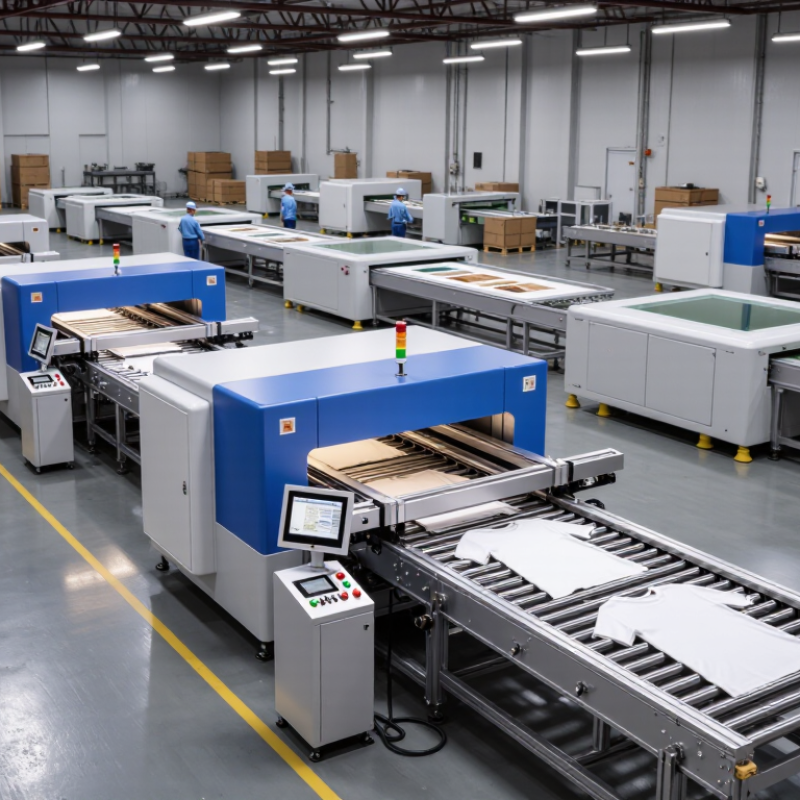
Screen printing equipment includes screen preparation units, exposure systems, presses, dryers, and inspection tools. Each stage affects registration, ink coverage, curing, and production speed. Smithers’ The Future of Global Printing to 2028 estimates worldwide print output at about 843 billion US dollars in 2023. This scale keeps screen printing relevant for textiles, packaging, electronics, and industrial markings.
China matters because its manufacturing ecosystem connects metalworking, automation, electronics, software, and spare parts. UNIDO’s International Yearbook of Industrial Statistics 2024 estimates that China generated roughly 31% of global manufacturing value added in 2022. That depth can support faster customization and competitive equipment costs. In practical line reviews, however, a low purchase price often hides weak drying control or difficult maintenance. A clean specification sheet is not enough. Operators should check actual registration stability, mesh tension support, curing consistency, and technician response times. The overlooked detail may become tomorrow’s production delay.
Tips: Request a live test using your substrate, ink, artwork, and target speed. Measure waste during setup, not only maximum output. Ask for electrical safety documents, calibration records, training hours, and spare-part availability. Compare total operating cost over three years. China offers impressive flexibility, but buyers still need disciplined verification. That is the part many evaluations get wrong.
| No. | Equipment Category | Typical Printing Application | Common Configuration in China | Typical Production Range | Main Advantage | Key Verification Point |
|---|---|---|---|---|---|---|
| 1 | Flatbed Manual Screen Printing Press | Textiles, posters, paper products, promotional items and small-batch packaging | Aluminum or steel frame, vacuum or mechanical table, manual squeegee movement | Approximately 200–600 impressions per hour, depending on the operator and substrate | Low initial investment and flexible job changeover | Table flatness, registration accuracy, frame compatibility and spare-part availability |
| 2 | Semi-Automatic Flatbed Press | Garments, paper packaging, labels, plastics and industrial parts | Pneumatic or servo-assisted stroke, automatic substrate lifting and adjustable off-contact | Approximately 500–1,200 impressions per hour | Improved consistency with moderate labor requirements | Stroke repeatability, pressure control, PLC functions and operator safety protection |
| 3 | Automatic Textile Screen Printing Press | T-shirts, sportswear, home textiles and promotional apparel | Multi-station carousel, automatic indexing, pneumatic squeegee and pallet heating options | Approximately 300–900 garments per hour, depending on colors and curing conditions | High repeatability for medium- and large-volume garment production | Number of stations, maximum print area, indexing precision and compatibility with flash curing |
| 4 | Roll-to-Roll Screen Printing Line | Flexible packaging films, decorative foils, electronic films and continuous labels | Web unwinding and rewinding, tension control, continuous screen unit and inline drying | Typical web speeds of approximately 10–60 meters per minute | Continuous production with reduced manual sheet handling | Web tension stability, registration control, drying capacity and maximum material width |
| 5 | Cylinder Screen Printing Press | Paperboard, folding cartons, premium labels and specialty graphics | Cylinder impression system with sheet feeder, gripper transport and delivery section | Approximately 1,000–3,000 sheets per hour, based on substrate and print format | Stable sheet transport and strong print pressure for rigid substrates | Maximum sheet size, feeder accuracy, gripper condition and substrate thickness range |
| 6 | Bottle and Container Screen Printer | Glass bottles, plastic containers, tubes, jars and cylindrical packaging | Automatic loading, rotary indexing, flame or plasma treatment and UV curing | Approximately 600–2,400 containers per hour, depending on colors and diameter | Accurate 360-degree decoration on curved surfaces | Container diameter range, surface-treatment method, ink adhesion and curing performance |
| 7 | Large-Format Screen Printing Press | Signage, architectural graphics, glass panels, boards and industrial sheets | Large vacuum table, rigid frame, pneumatic squeegee and modular drying system | Common working areas from approximately 1,000 × 1,500 mm to 2,000 × 3,000 mm | Handles oversized substrates and high-opacity specialty inks | Vacuum uniformity, frame rigidity, screen-to-table parallelism and maximum substrate weight |
| 8 | Screen Exposure Unit | Stencil preparation for textile, packaging, glass and industrial screen printing | Vacuum frame with LED, metal-halide or fluorescent UV light source | Typical exposure formats from approximately 500 × 600 mm to 1,500 × 2,000 mm | Consistent stencil resolution and repeatable exposure times | Light uniformity, vacuum strength, exposure control and compatibility with emulsion types |
| 9 | Screen Washing and Reclaiming System | Stencil cleaning, ink removal, emulsion stripping and mesh recovery | High-pressure wash pump, chemical dosing, filtration and wastewater collection | Water pressure commonly approximately 50–150 bar, depending on the process | Reduces manual cleaning time and supports repeatable screen reclamation | Water consumption, chemical resistance, filtration, noise level and wastewater compliance |
| 10 | Screen Printing Curing and Drying Equipment | Textile inks, UV coatings, solvent inks, ceramic inks and specialty industrial finishes | Infrared, hot-air, UV or hybrid curing with adjustable temperature and conveyor speed | Typical conveyor widths of approximately 400–1,800 mm; curing temperatures vary by ink system | Improves ink adhesion, rub resistance, gloss and production throughput | Energy consumption, temperature uniformity, UV intensity, conveyor stability and exhaust control |
It usually includes screen preparation units, exposure systems, presses, dryers, and inspection tools. Each stage affects registration, ink coverage, curing, and production speed. The dryer matters greatly.
China connects metalworking, automation, electronics, software, and spare-parts production. This ecosystem supports customization and competitive equipment costs. Lower prices need careful checking.
Request a live test with your artwork, substrate, ink, and target speed. Check registration after long runs, not only one clean sample. Measure setup waste, too.
Review frame size, printing speed, registration accuracy, drying performance, and compatible substrates. Also check mesh tension support and squeegee pressure control. Numbers can hide weak performance.
Examine assembly areas, electrical wiring, spare-parts storage, and quality-control records. Look for guarded moving parts and accessible maintenance points. Messy wiring deserves questions.
Include tooling, packaging, shipping, installation, training, replacement parts, and software updates. Compare energy use and maintenance over three years. The quotation is only one piece.
Request drawings, manuals, safety documents, calibration records, warranty terms, and installation guidance. Confirm technician response times and spare-part availability. Promises should become paperwork.
Similar users can describe delivery reliability, maintenance effort, and real production output. Their experience may expose problems hidden by polished factory photographs. I once trusted photos too much.
Output depends on ink, substrate, machine settings, and operator skill. Irregular glass or industrial parts may print slower than flat materials. Maximum speed is not daily speed.
This guide explores China’s Top 10 Screen Printing Equipment Manufacturers and explains why China has become an important source for reliable, cost-effective, and increasingly advanced printing solutions. It begins by defining Screen Printing Equipment, including manual, semi-automatic, and fully automatic systems, while outlining how these machines support applications in textiles, packaging, electronics, signage, and industrial production. Readers will also learn how to evaluate manufacturers through production capabilities, engineering expertise, quality control, certifications, customization options, and after-sales service.
The article then presents a practical profile of ten leading manufacturer types without focusing on brand names, highlighting their product strengths, technical features, and suitable industries. It also reviews key technologies such as precision registration, automated material handling, curing integration, energy efficiency, and digital control systems. Finally, the guide explains how to compare suppliers by examining equipment performance, total ownership cost, delivery terms, technical support, spare-parts availability, and scalability, helping buyers choose a manufacturer that matches their production goals and long-term requirements.